


Things to Do in Gangtok
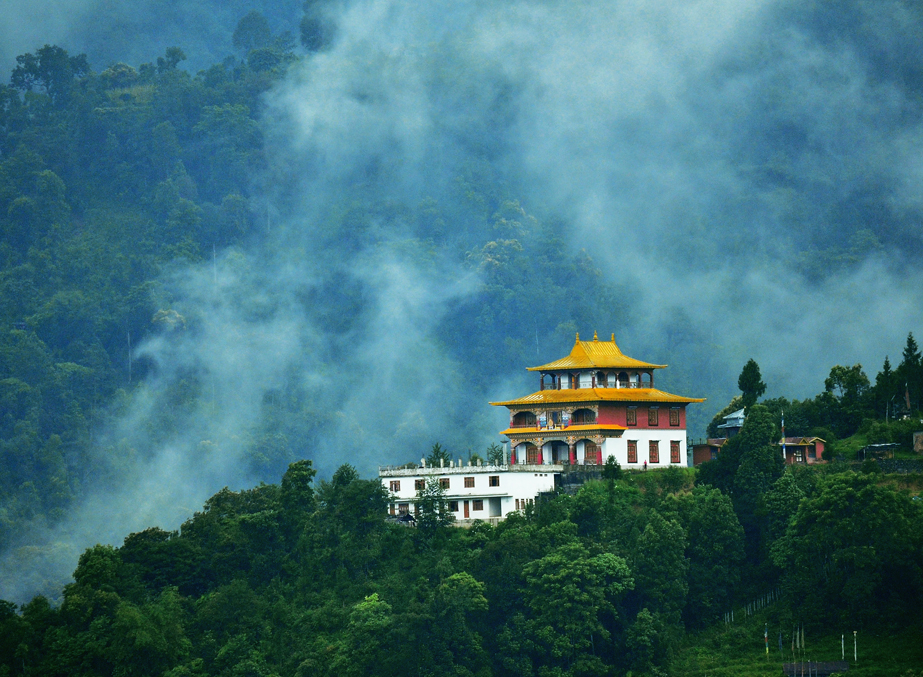
22 Activities With Costs, Timings and Best Seasons (2026)
The best things to do in Gangtok include paragliding above the Reshithang valley, white-water rafting on the Teesta, riding the Deorali ropeway, walking the pedestrian-only MG Marg, and taking the high-altitude day trip to Tsomgo Lake, Baba Mandir and Nathula Pass. You can fill anywhere from a lazy two days to a packed week here, mixing mountain drives, old monasteries and easy market evenings.
New to the city? Start with our Gangtok destination guide, then use this page to plan what to actually do.
TL;DR
Gangtok suits almost everyone: adventure seekers, families, couples and slow travellers. Paid adventure runs from about Rs 1,000 for a short raft or a day hike up to Rs 5,000 for a long paragliding flight, while many of the best experiences (viewpoints, monasteries and MG Marg evenings) cost nothing. Prices, timings and permit rules below are current as of 2026, so reconfirm with your operator before you book.
Suggested Read: Places To Visit in Gangtok, How To Reach Gangtok & Best Time To Visit Gangtok
You might also like: Places To Visit in Bhutan & Things To Do in Bhutan
Things to do in Gangtok at a glance
Here is every activity in one place, grouped by type, with a rough cost, how long it takes, the best season and how far it sits from Gangtok.
| Activity | Type | Typical cost (2026) | Time needed | Best season | From Gangtok |
|---|---|---|---|---|---|
| Paragliding | Adventure | Rs 2,500 to 5,000 | 2 to 3 hrs | Mar-Jun, Sep-Nov | Take-off near city |
| Teesta river rafting | Adventure | Rs 1,000 to 5,500 | Half day | Oct-Jun (best Mar-May) | ~37 km stretch |
| Mountain biking | Adventure | Ask operator | 3 hrs to full day | Oct-May | In & around city |
| Deorali ropeway (cable car) | Views | Rs 117 / Rs 77 child | ~7 min each way | Year-round | 2 km |
| Tsomgo Lake + yak safari | Nature | Tour Rs 800-1,000; yak Rs 300-500 | Half to full day | Mar-May, Oct-Dec | 40 km |
| Nathula Pass | Nature | Permit Rs 200 + tour | Full day | May-Oct (Wed-Sun) | 56 km |
| Baba Mandir | Spiritual | In permit tour | Full day | May-Oct | 52 km |
| Tashi View Point | Views | Free (binoculars Rs 10) | 30 to 45 min | Oct-Mar sunrise | 8 km |
| Enchey Monastery | Spiritual | Free | 30 to 45 min | Year-round | 3 km |
| Rumtek Monastery | Spiritual | ~Rs 10 | 2 to 3 hrs | Year-round | 24 km |
| Do Drul Chorten | Spiritual | Free | 30 min | Year-round | 3 km |
| Namgyal Institute of Tibetology | Cultural | Rs 10 | 1 hr | Closed Sun & 2nd Sat | 3 km |
| Himalayan Zoological Park | Nature | Rs 25 (closed Thu) | 1 to 2 hrs | Year-round | 3 km |
| Ban Jhakri Falls | Nature | ~Rs 50-100 | 1 hr | Year-round | 7 km |
| Ganesh Tok / Hanuman Tok | Views | Free | 30 to 45 min | Oct-Mar | 7-9 km |
| Flower Exhibition Centre | Nature | ~Rs 20 | 30 min | Mar-May blooms | 2 km |
| MG Marg | Shopping | Free | An evening | Year-round (shops shut Tue) | In city |
| Lal Bazaar | Local life | Free | 1 hr | Year-round | In city |
| Sikkimese food crawl | Local life | Rs 200 to 600 | 1 to 2 hrs | Year-round | In city |
| Temi Tea Garden (day trip) | Nature | Free garden | Full day | Mar-May | ~50 km |
| Mangan (day trip) | Culture | Taxi/fuel | Full day | Mar-Jun, Oct | 65 km |
| Seven Sisters Waterfalls | Nature | Free | 30 min stop | Jun-Sep fullest | 32 km |
Adventure things to do in Gangtok
For adventure, Gangtok’s headline activities are paragliding, Teesta river rafting, mountain biking and day treks, plus the high-altitude drive to Nathula Pass. Most run best from October to June, outside the monsoon.
Paragliding in Gangtok
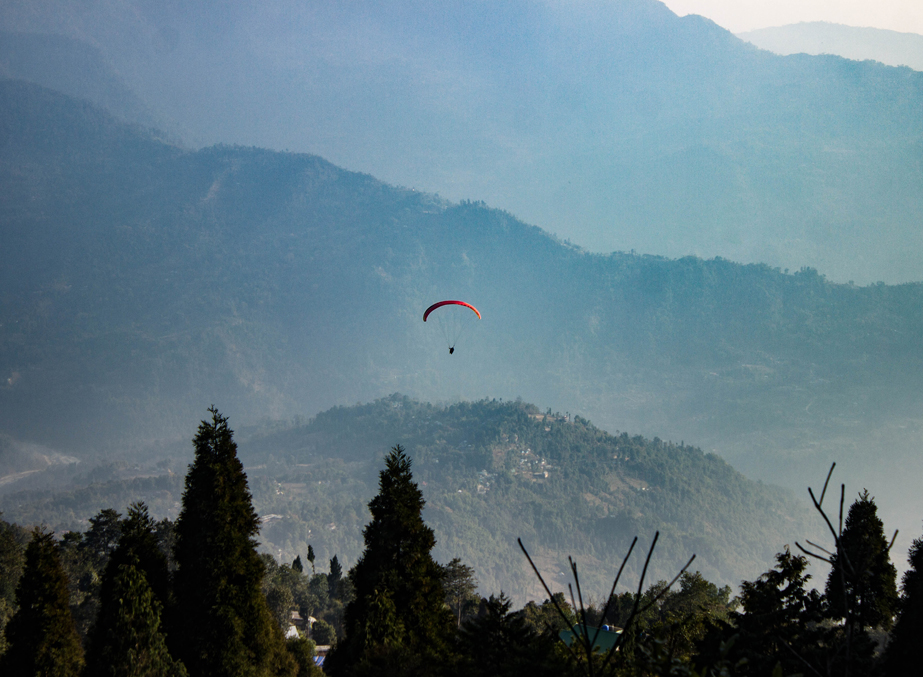
Paragliding in Gangtok is a tandem flight where you are strapped to a certified pilot and a wing, and you launch off a ridge above the city. There are two options: a medium flight from Baliman Dara that lasts about 5 to 10 minutes, and a longer high flight from Bulbuley Dara of about 20 to 30 minutes, both landing near the Reshithang sports ground.
Cost and timing: Roughly Rs 2,500 to 3,200 for a medium flight and Rs 4,500 to 5,000 for a high flight (as of 2026), with a video add-on around Rs 500. Flights usually run 9 am to 3 pm, calmest between 10 am and 12:30 pm.
Best season: March to June and September to November. There is no flying during the July and August monsoon.
Tip: Weight limits run roughly 30 to 85 kg. Morning slots have steadier thermals and the clearest Kanchenjunga backdrop, so book the first flights of the day.
Suggested Read: Adventure Sports in Sikkim
You can also check out the Adventure Activities in Bhutan.
Sikkim Best Sellers
-

03 Nights / 04Days
Gangtok Tour
Rs. 7500 Rs. 6200
-
07 Nights / 08Days
Gangtok Pelling Darjeeling Tour
Rs. 14500 Rs. 17500
-
04 Nights / 05Days
Gangtok Darjeeling Tour Package
Rs. 9200 Rs. 1100
-
08 Nights / 09Days
Gangtok Lachung Pelling Tour
Rs. 15000 Rs. 18000
-
04 Nights / 05Days
Gangtok Lachung Tour
Rs. 8800 Rs. 10500
-
08 Nights / 09Days
Gangtok Lachung Pelling Darjeeling Tour
Rs. 17000 Rs. 20500
-
07 Nights / 08Days
Gangtok Pelling Darjeeling Tour
Rs. 14500 Rs. 17500
-
04 Nights / 05Days
Gangtok Darjeeling Tour Package
Rs. 9200 Rs. 11000
-
05 Nights / 06Days
Delightful Gangtok And Darjeeling
Rs. 10500 Rs. 12500
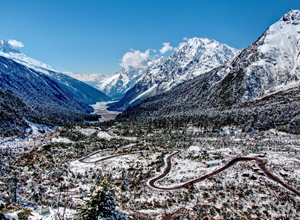
You can also check our customized Bhutan Tour Packages
River rafting on the Teesta
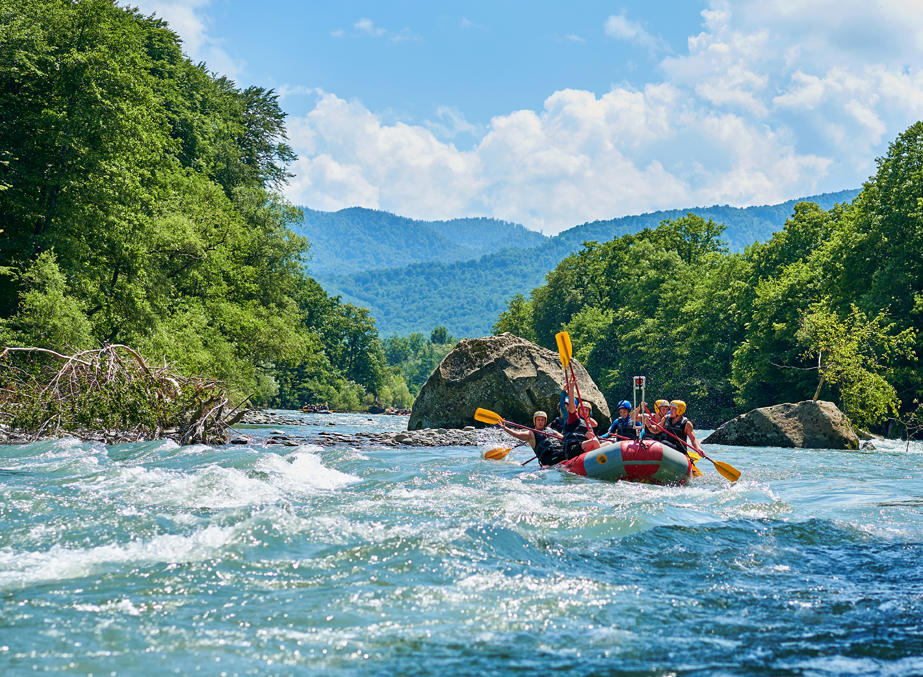
Teesta river rafting is a guided raft run down grade II to IV rapids on the Teesta, usually on the Makha to Rongpo stretch about an hour from Gangtok. You wear a life jacket and ride with a trained guide, so non-swimmers can join.
Cost and time: About Rs 1,000 for a short stretch up to Rs 5,500 for a longer combined run. Budget half a day with transfers, of which 1 to 2 hours is on the water.
Best season: October to June, with spring (March to May) offering the best flow and mildest water. Rafting closes in the monsoon when the river runs too high.
Tip: First-timers should ask for the shorter grade II to III section. The grade IV water below Bardang is for confident rafters only.
Suggested Read: White Water River Rafting in Sikkim
Mountain biking and cycling
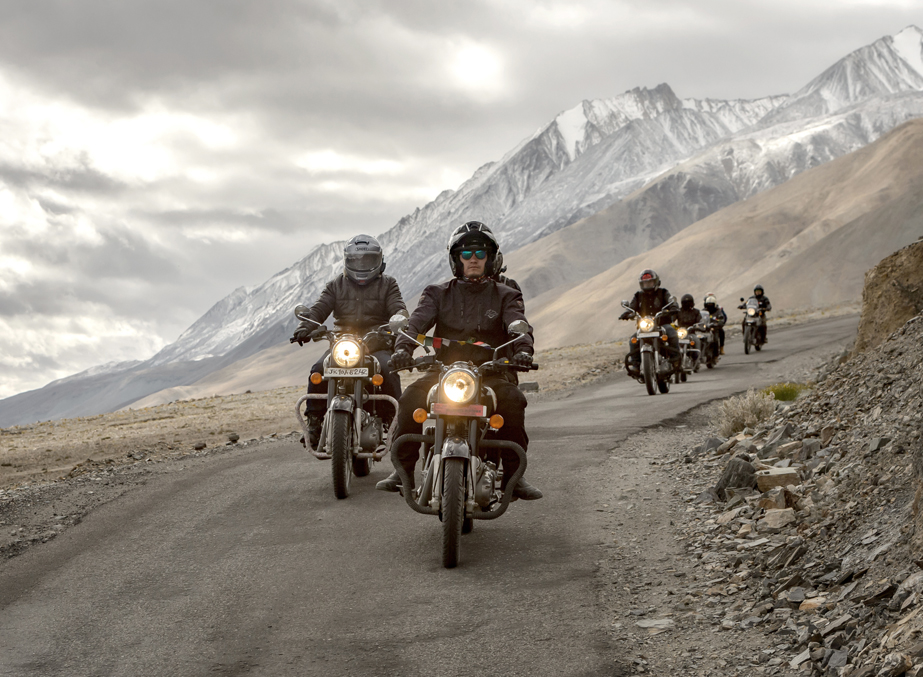
Gangtok is a base for guided mountain biking on Himalayan trails, from short half-day loops near the city to multi-day rides toward Rumtek and the old Silk Route. Costs vary by route and operator, so ask for a current quote.
Best season: October to May, when the trails are driest. Some riders still head out in the monsoon slush, though grip suffers.
Fact: Sikkim’s forest roads and light traffic outside town make the region one of the better mountain-biking bases in eastern India.
Day hikes and short treks
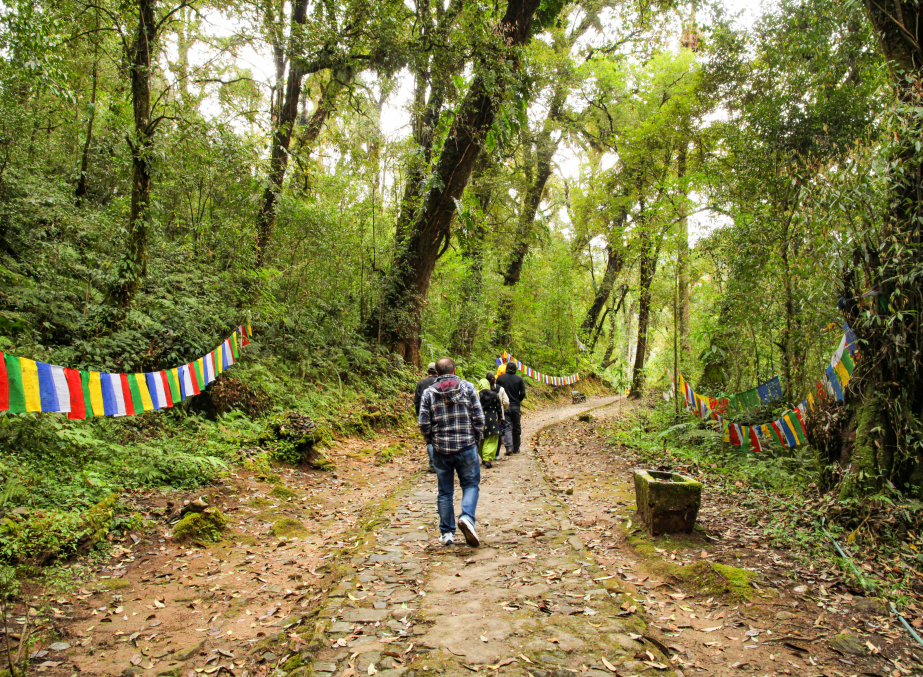
Around Gangtok you can do easy half-day walks, such as the ridge between Ganesh Tok and Hanuman Tok, or the forest trail near Ban Jhakri Falls. Serious multi-day treks like Dzongri and Goecha La start from Yuksom in West Sikkim, not from Gangtok itself.
Tip: For a taste of the hills without a multi-day commitment, the climb to Tashi View Point at sunrise is enough.
Spiritual and cultural things to do in Gangtok
Gangtok’s spiritual sights are its Buddhist monasteries and stupas: Enchey and Rumtek monasteries, Do Drul Chorten, and the Namgyal Institute of Tibetology. Most are free or nearly free and open year-round.
Catch the masked Cham dances at Enchey Monastery
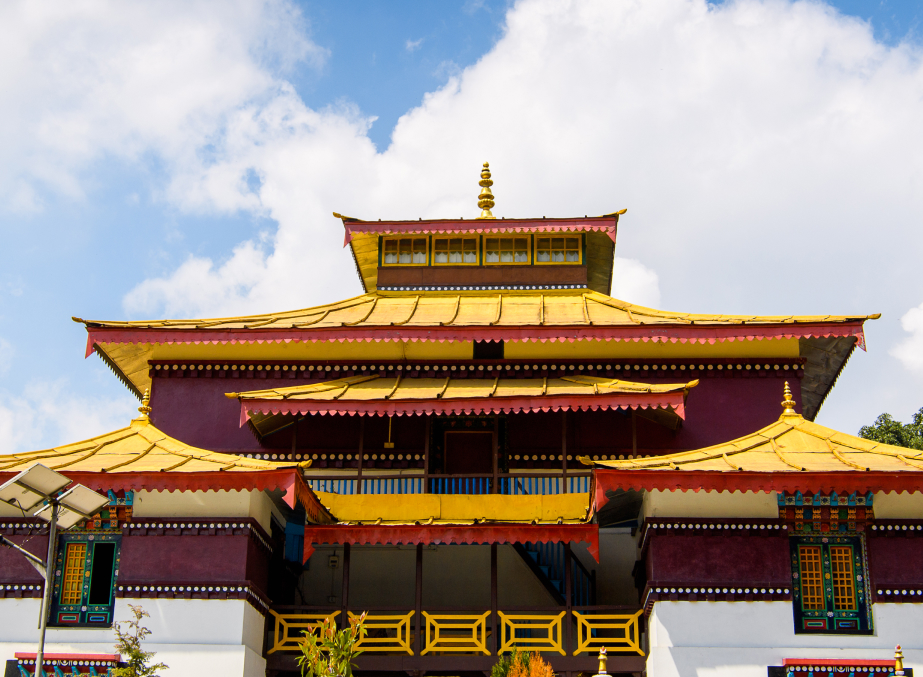
Enchey Monastery is a Nyingma monastery about 3 km from MG Marg, first founded in the 19th century and set among tall pines above the town. Step inside and you will usually find it calm, with monks going about the day and the smell of butter lamps in the air. Its big draw is the annual Cham, a masked ritual dance where monks in bright brocade and carved masks whirl to horns and cymbals in the courtyard. Even outside festival season, the short walk up and the valley views from the terrace make it an easy, quiet start to a Gangtok morning.
Timing and cost: Open about 9 am to 5 pm daily, free entry.
Fact: The annual Cham dance falls around December and January and moves with the Tibetan calendar, so check the exact dates locally before you plan around it.
Spend a morning at Rumtek Monastery
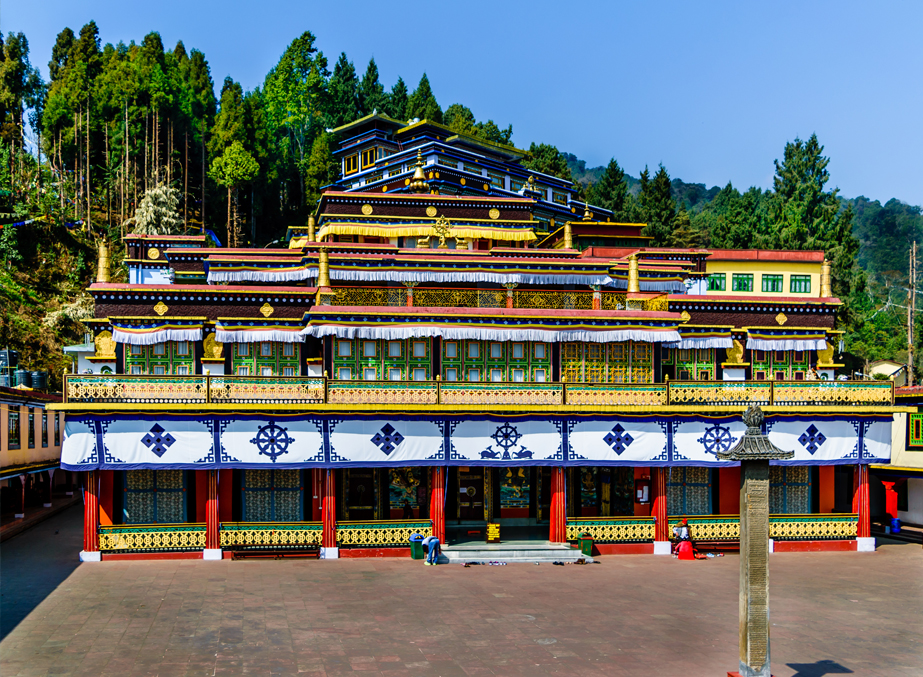
Rumtek is one of the largest and most important monasteries in Sikkim, the seat of the Karma Kagyu lineage, sitting on a hillside about 24 km from Gangtok across the valley. The drive out is half the experience, winding past terraced fields and prayer flags before the golden-roofed complex comes into view. Inside the main shrine hall you will find towering statues, silk thangkas and monks in prayer or debate, and behind it the ornate Golden Stupa. Give it a couple of hours, and pair it with the nearby Lingdum (Ranka) monastery if you want to make a half-day of it.
Timing and cost: Open about 9 am to 6 pm, around Rs 10 entry. Carry a photo ID, there is a security check.
Tip: Pair it with the nearby Lingdum (Ranka) monastery for an easy half-day loop.
Spin the prayer wheels at Do Drul Chorten
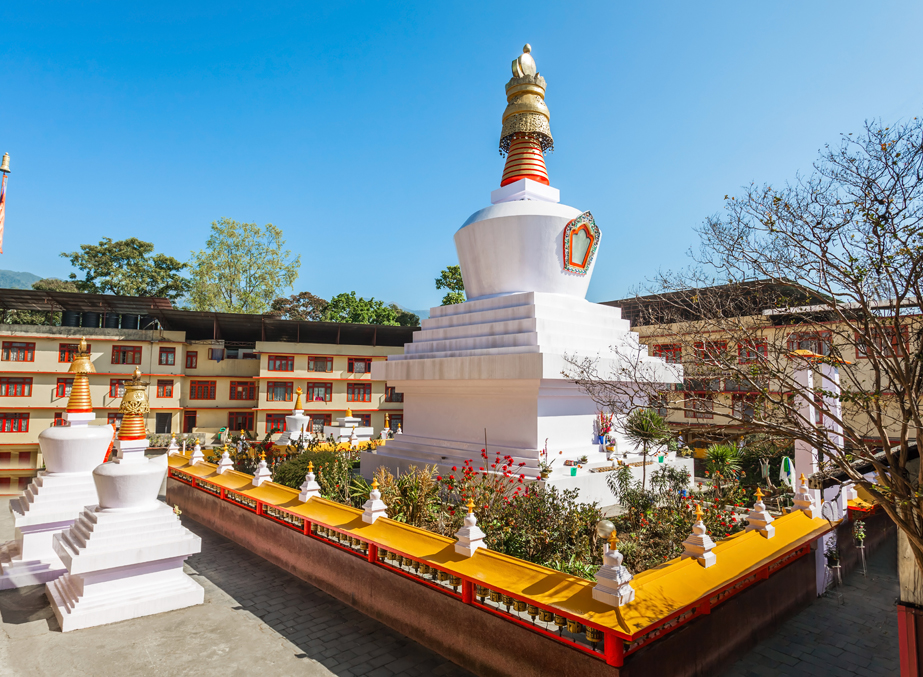
Do Drul Chorten is a gleaming white stupa in Deorali, about 3 km from the centre, topped with a golden spire and ringed by 108 prayer wheels. The thing to do here is join the locals in walking clockwise around it, giving each wheel a spin as you pass. It stays busy with quiet devotion rather than tour crowds, and two large statues of Guru Padmasambhava sit in the shrines alongside. It takes only half an hour and stands a short walk from the Namgyal Institute, so the two go together naturally.
Timing and cost: Open about 8 am to 6 pm, free entry.
Explore Tibetan Buddhism at the Namgyal Institute of Tibetology
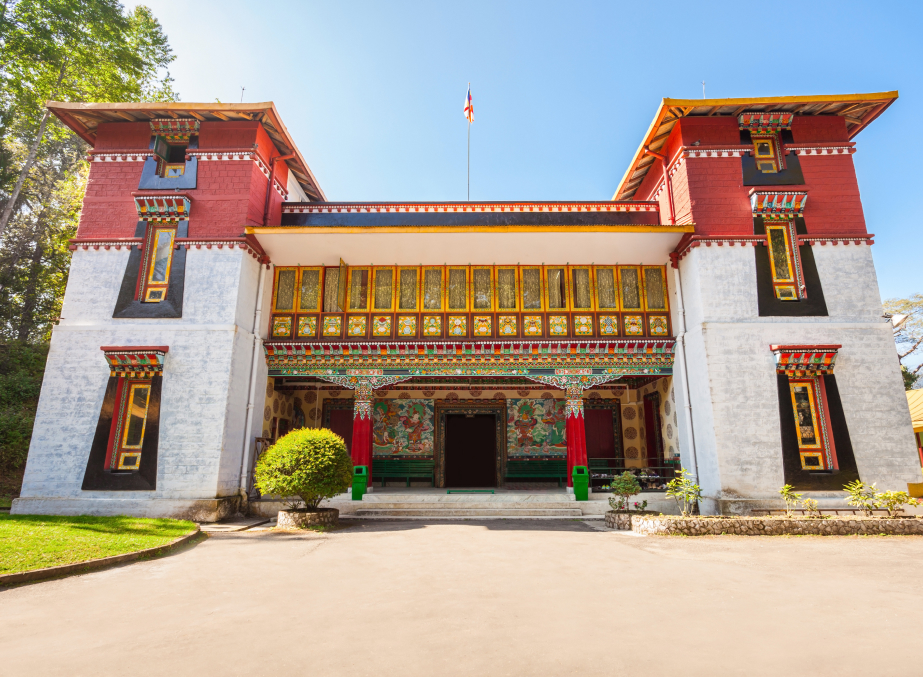
The Namgyal Institute of Tibetology is a museum and research centre in Deorali holding one of the world’s largest collections of Tibetan Buddhist manuscripts, statues and thangkas outside Tibet. Housed in a traditional Tibetan-style building among pine trees, it is the best place in Gangtok to slow down and understand what you are seeing at the monasteries. The galleries hold rare masks, ritual objects, coins and centuries-old scrolls, with enough labelling to make sense of it all. It sits a short walk from Do Drul Chorten, so the two combine into an easy Deorali stop.
Timing and cost: Open 10 am to 4 pm, closed Sundays, second Saturdays and public holidays. Entry Rs 10.
Highlight: The Tibetan-style building and its rare masks and manuscripts make it the best rainy-afternoon stop in the city.
Nature and viewpoints in Gangtok
For nature and views, Gangtok delivers Tsomgo Lake, Nathula Pass, the Tashi and Hanuman viewpoints, Ban Jhakri Falls and the Himalayan Zoological Park. The high-altitude spots need a permit and a full day, while the in-town ones are quick and mostly free.
Take the day trip to Tsomgo (Changu) Lake
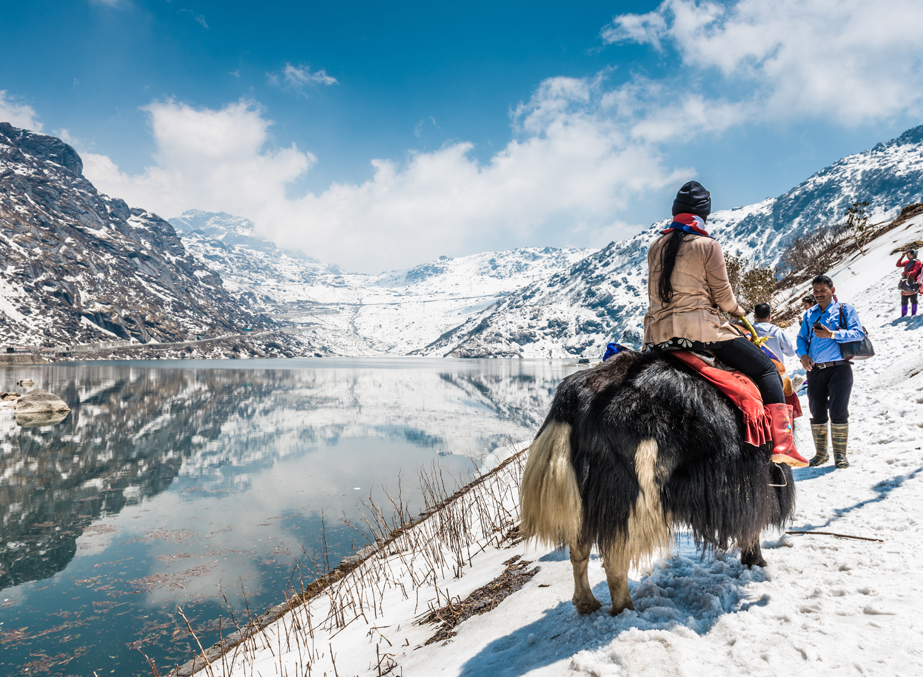
Tsomgo Lake, also called Changu, is a glacial lake at about 3,780 m, 40 km from Gangtok on the old road to Nathula. It changes with the seasons: frozen and silent in winter, mirror-still and ringed by wildflowers in late spring, and fringed with snow in between. The drive up is a steady climb through switchbacks and army checkposts, and at the top you can ride a decorated yak along the shore or warm up with tea and maggi at the stalls. It is cold, high and beautiful, and for many visitors it is the single most memorable half-day out of Gangtok.
Cost and time: A shared Tsomgo plus Baba Mandir jeep tour costs about Rs 800 to 1,000 with the permit included, and takes half to a full day. Yak rides at the lake run Rs 300 to 500.
Tip: It is cold and high. Layer up, walk slowly for the first hour, and rent a jacket and gumboots at the base if there is snow.
Drive up to Nathula Pass
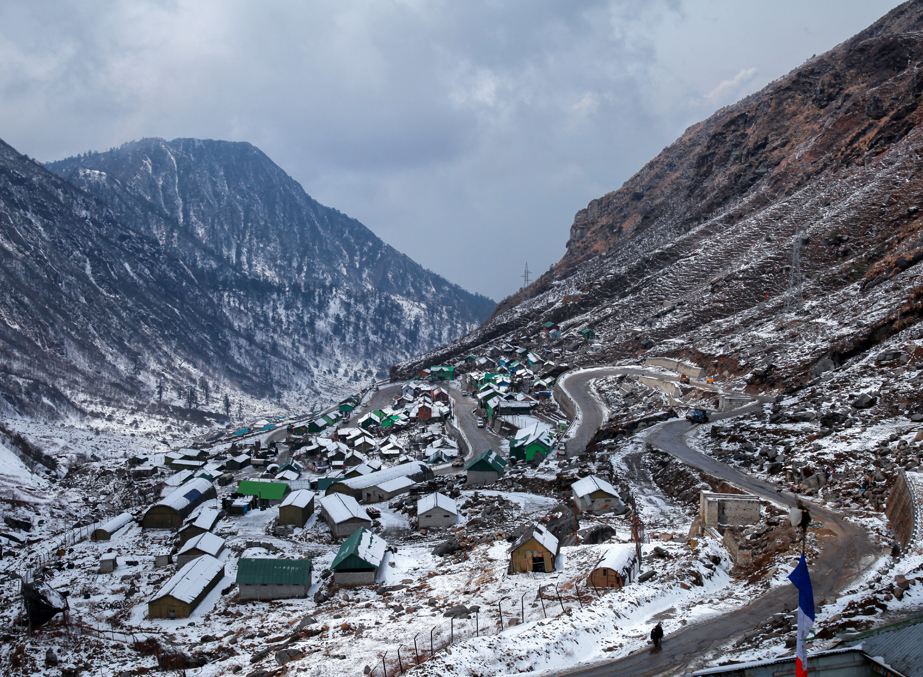
Nathula is a 4,310 m pass on the old Silk Route, right on the India and China border, 56 km and a few hours’ drive from Gangtok. Standing here you can see the fenced boundary and, on the days it is manned, soldiers from both sides just metres apart. The road is dramatic and the air is thin, so the visit is as much about the sheer altitude and history as the view itself. It opens Wednesday to Sunday and is restricted to Indian nationals, so plan it around your permit day.
Permit: A permit of about Rs 200 per person is arranged a day ahead through a registered Sikkim agent, using your photo ID and passport-size photos. Foreign nationals are not permitted.
Fact: At this altitude the air is thin and the weather turns fast. Older travellers and anyone with heart or breathing issues should check with a doctor first.
Pay your respects at Baba Mandir
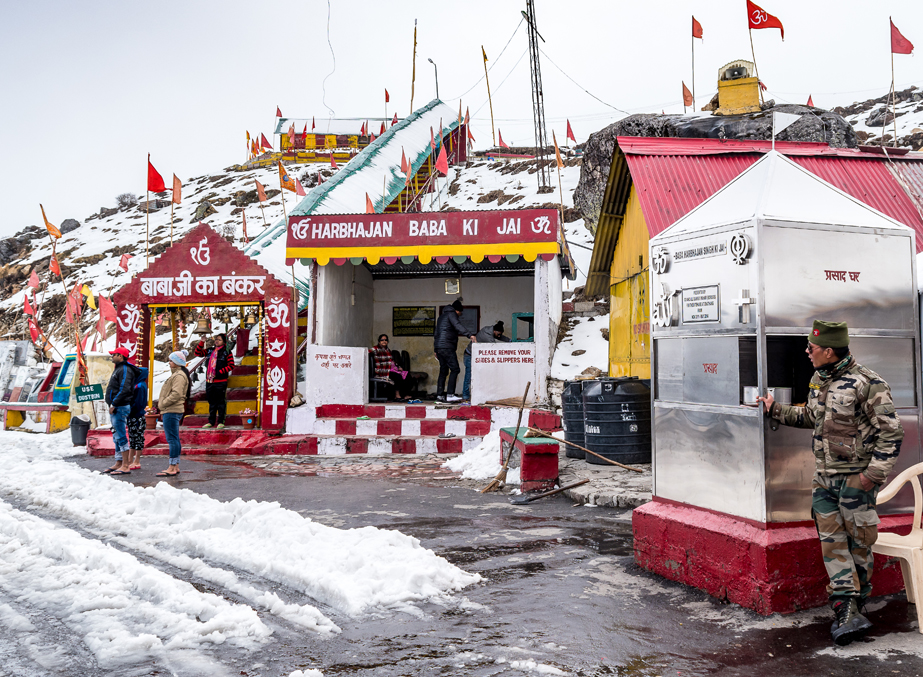
Baba Mandir is a shrine to Baba Harbhajan Singh, an Indian Army soldier revered by troops posted along this stretch of the frontier, at about 4,000 m and 52 km from Gangtok. It is usually folded into the same permit trip as Tsomgo Lake and Nathula, and the stop has a quiet, almost reverent feel very different from the lake below. Soldiers and travellers alike leave offerings, and you will often see bottles of water left to be blessed. Even if you are not religious, the story and the high, wind-scoured setting are worth the short halt.
Watch sunrise over Kanchenjunga at Tashi View Point
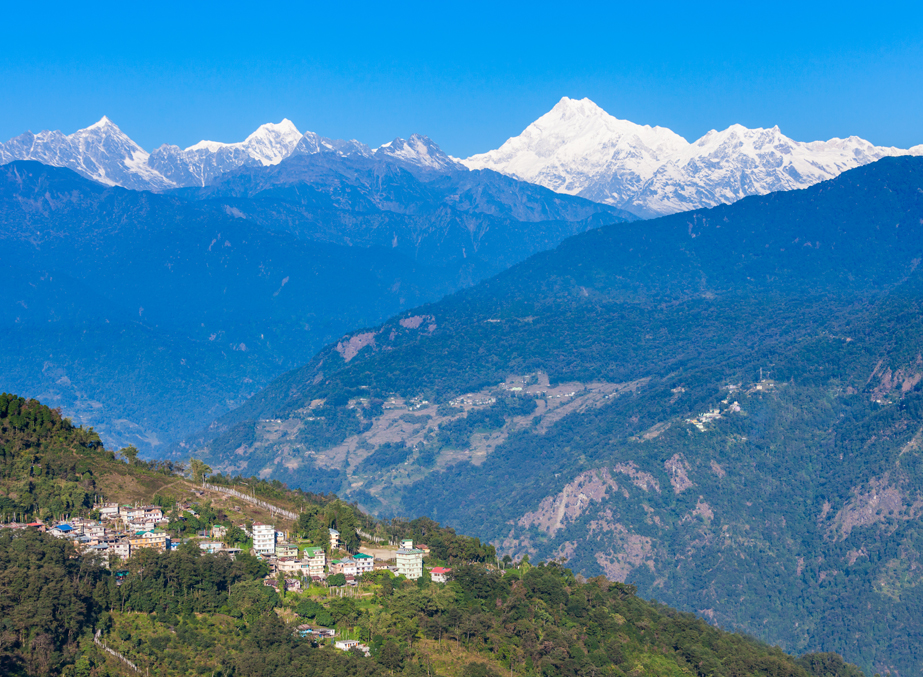
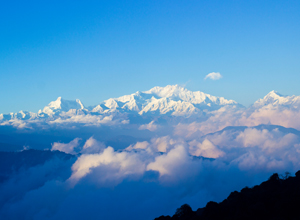
Tashi View Point is a small roadside terrace 8 km from Gangtok, built for one thing: the view of Kanchenjunga, the world’s third-highest peak, across the valley. Come at dawn on a clear day and you can watch the first light turn the snow gold while the town below is still in shadow. There are mounted binoculars, a couple of tea stalls, and on a good morning a crowd of quiet photographers. It is free, quick, and when the weather plays along it is one of the best free things to do in Gangtok.
Timing and cost: Free, with binoculars for about Rs 10. Best on clear October to March mornings.
Climb to Ganesh Tok and Hanuman Tok
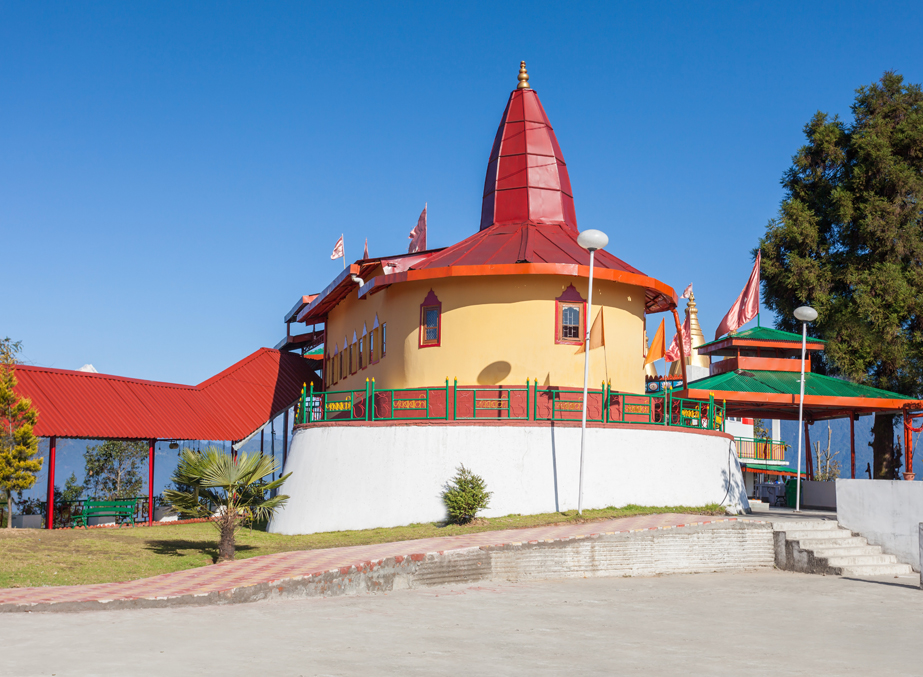
Ganesh Tok (7 km) and Hanuman Tok (9 km) are two small hilltop temples set above Gangtok, each with a wraparound view of the town, the ridges and, on clear days, Kanchenjunga. Ganesh Tok is tiny, so small you almost crawl into the shrine, but the wooden viewing balcony around it is the real reason to stop. Hanuman Tok sits higher and quieter, kept spotless by the army, reached by a steady climb of steps in cool mountain air. Both are free, take under an hour each, and pair well with a morning at nearby Tashi View Point.
Wander the Ban Jhakri Falls energy park
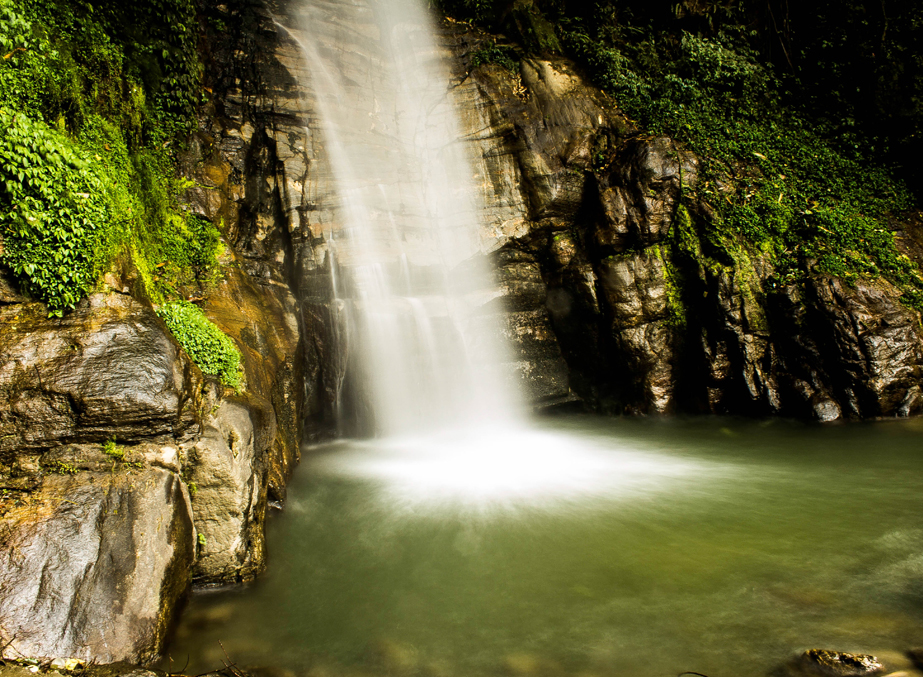
Ban Jhakri Falls is a landscaped waterfall and cultural park about 7 km from the city, themed around the ban jhakri, the shamanic forest healer of Sikkimese folklore. Wooden walkways lead you past the falls, ponds and carved statues that retell local legends, so it is an easy, shaded stroll rather than a strenuous outing. It is one of the better spots in Gangtok for families with children, with plenty of room to walk and picnic. Give it about an hour, ideally combined with the nearby Ranka side of the valley.
Cost: Entry about Rs 50 to 100.
Spot red pandas at the Himalayan Zoological Park
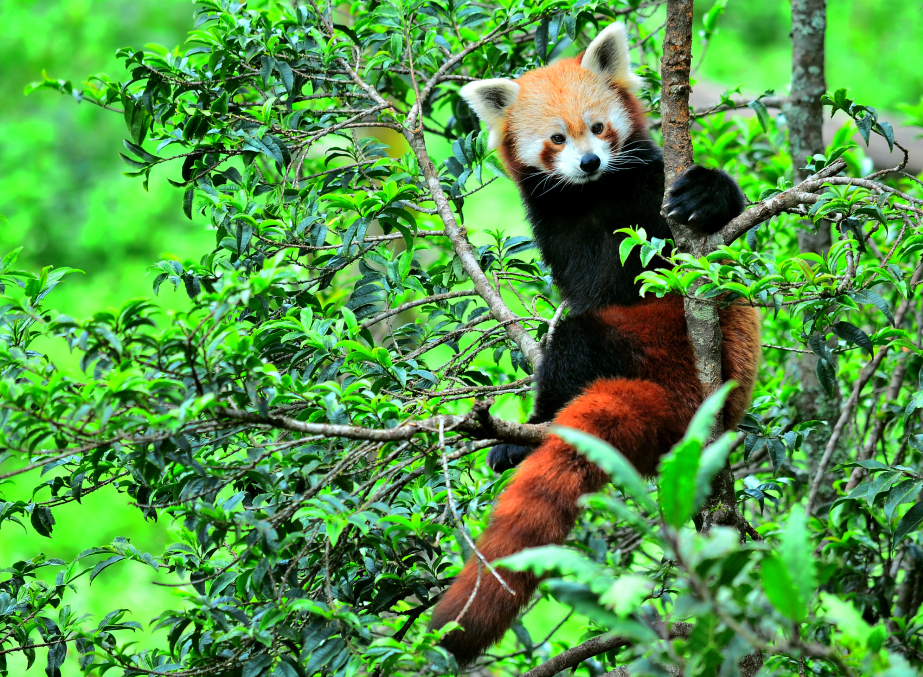
The Himalayan Zoological Park at Bulbulay, 3 km from Gangtok, is not a caged zoo but a stretch of hillside forest where animals live in large, open enclosures you drive and walk between. The stars are the red pandas, snow leopards and Himalayan black bears, all Himalayan species you are unlikely to see so easily anywhere else. Because it spreads across the slope, expect a fair bit of walking under the trees, which is part of the pleasure. Go early in the day, when the animals are active and the forest light is at its best.
Timing and cost: Open 9 am to 4 pm, closed Thursdays. Entry Rs 25 for Indians and Rs 50 for foreigners, plus a vehicle charge.
Tip: Go early, the animals are most active in the morning.
See the orchids at the Flower Exhibition Centre
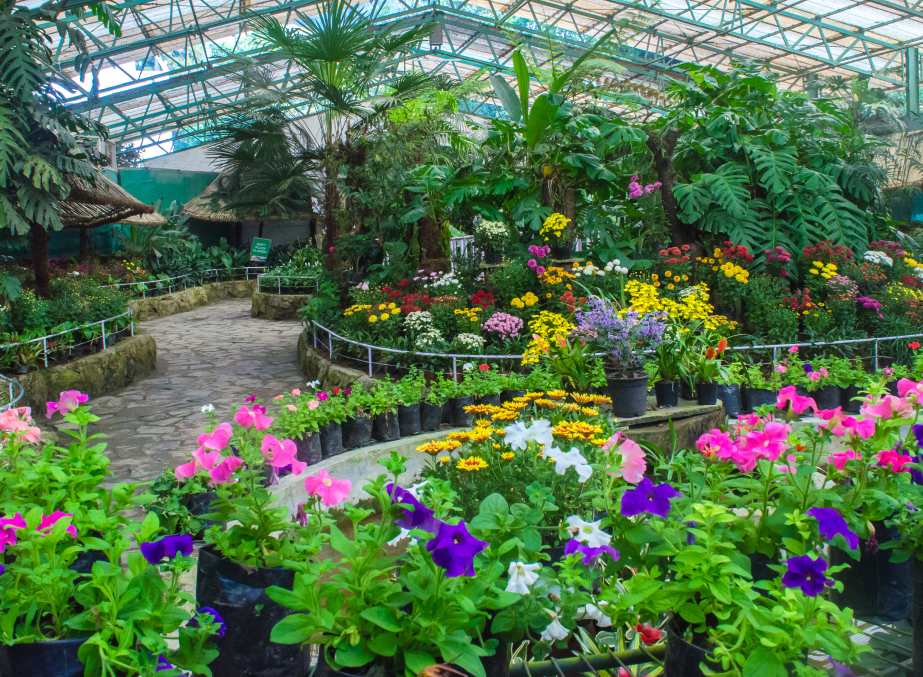
The Flower Exhibition Centre near the Ridge, about 2 km from MG Marg, is a compact glasshouse packed with Sikkim’s orchids and seasonal blooms. Sikkim is orchid country, home to hundreds of species, and this is the easiest place in town to see them without trekking into the hills. In spring the central display bursts into colour, but there is usually something flowering whatever the month. It takes only half an hour and slots neatly into a walk around the nearby Ridge and White Hall.
Timing and cost: Small entry around Rs 20, best in spring during the orchid show.
Markets, food and local life in Gangtok
For local life, walk MG Marg in the evening, shop Lal Bazaar by day, and eat your way through momos, thukpa and a pot of tongba. All of it is cheap and central.
Stroll MG Marg in the evening
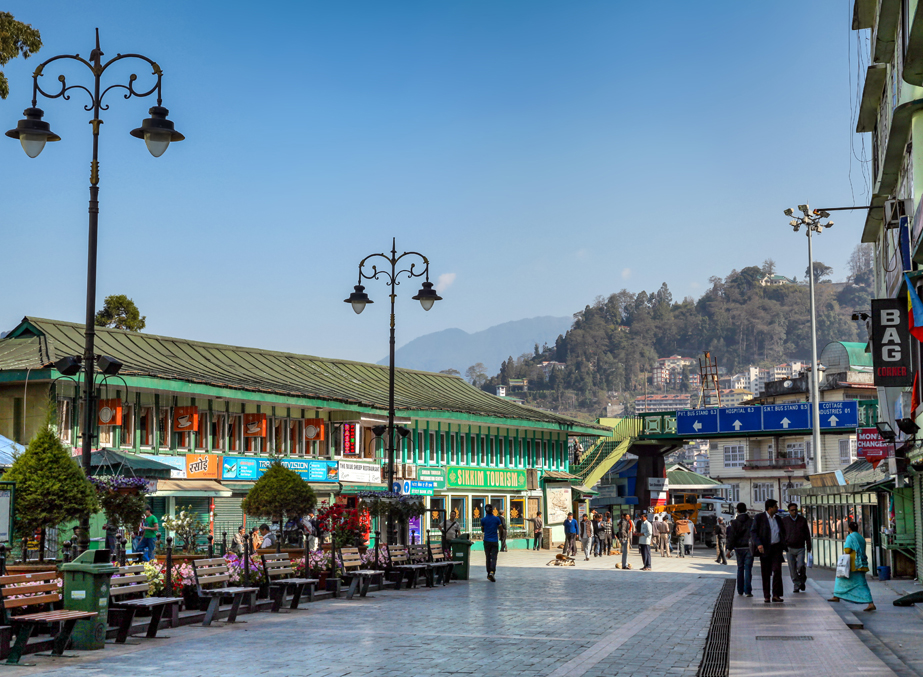
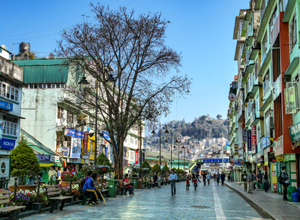
MG Marg is Gangtok’s pedestrian-only main promenade, a paved, litter-free and smoke-free boulevard lined with cafes, shops, benches and flower beds down the middle. No cars are allowed, so the whole street becomes a place to simply walk, sit and people-watch, especially in the evening when the lamps come on and everyone is out. This is where Gangtok gathers, and an hour here with a coffee or a plate of momos costs almost nothing. It is the best free evening in the city.
Note: Shops usually shut on Tuesdays for cleaning, though the street itself stays open. Come at dusk when the lamps switch on.
Shop the stalls at Lal Bazaar
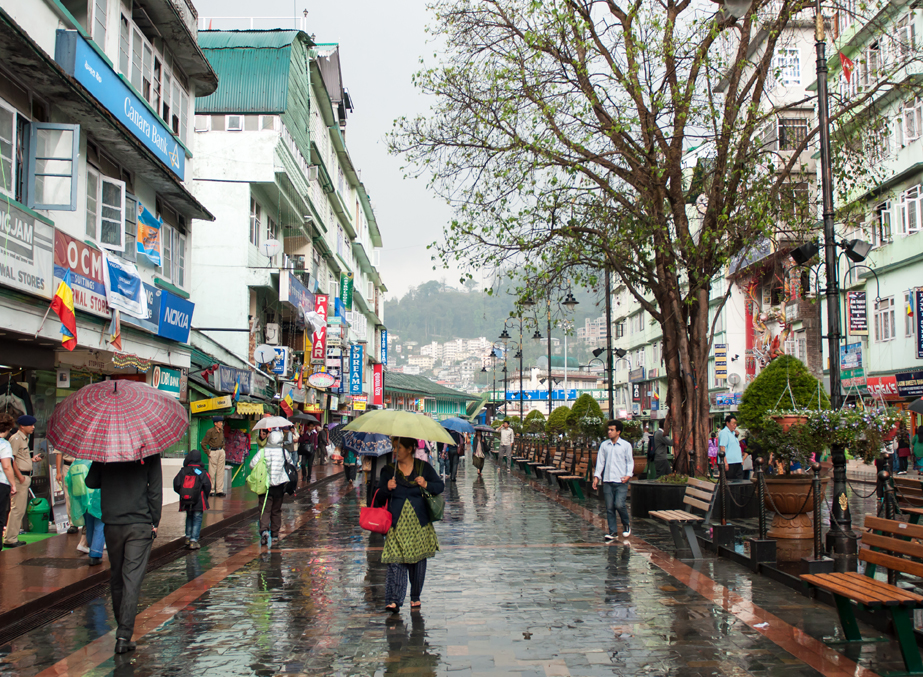
Lal Bazaar is Gangtok’s traditional market, a multi-storey bustle of vendors that is busiest and most colourful on Sundays. This is where Sikkimese farmers come down from the villages to sell fermented cheese, dried fish, bamboo shoots, foraged greens and mounds of seasonal produce. Walking through it gives you a far more honest slice of local life than any tourist strip, and it is a good place to pick up dalle chillies or churpi to take home. Browsing is free, and the upper floors have local snacks if you get hungry.
Eat your way through Sikkimese food
Sikkimese food is worth treating as an activity in itself, not just a refuel between sights. Start with momos and a bowl of thukpa, then be braver with gundruk and sinki soups made from fermented greens, phagshapa (pork with radish), and sticky, comforting sael roti. To drink, order a tongba, a warm pot of fermented millet you sip through a bamboo straw and top up with hot water as you go. Expect around Rs 200 to 600 for a proper meal at the local joints just off MG Marg, a little more with drinks.
Sikkim Best Sellers
-
03 Nights / 04Days
Gangtok Tour
Rs. 7500 Rs. 6200
-
07 Nights / 08Days
Gangtok Pelling Darjeeling Tour
Rs. 14500 Rs. 17500
-
04 Nights / 05Days
Gangtok Darjeeling Tour Package
Rs. 9200 Rs. 1100
-
08 Nights / 09Days
Gangtok Lachung Pelling Tour
Rs. 15000 Rs. 18000
-
04 Nights / 05Days
Gangtok Lachung Tour
Rs. 8800 Rs. 10500
-
08 Nights / 09Days
Gangtok Lachung Pelling Darjeeling Tour
Rs. 17000 Rs. 20500
-
07 Nights / 08Days
Gangtok Pelling Darjeeling Tour
Rs. 14500 Rs. 17500
-
04 Nights / 05Days
Gangtok Darjeeling Tour Package
Rs. 9200 Rs. 11000
-
05 Nights / 06Days
Delightful Gangtok And Darjeeling
Rs. 10500 Rs. 12500
Day trips from Gangtok
Walk the rows at Temi Tea Garden
Temi is Sikkim’s only tea estate, about 50 km south of Gangtok, its rows of tea combed across a ridge that falls away towards the snow peaks. You can walk the neat green terraces, watch pluckers at work in season, and stop at the factory or the hilltop cafe for a fresh cup of the estate’s prized black tea. The setting, with Kanchenjunga on the horizon on clear days, makes it one of the prettiest drives out of Gangtok. It is a relaxed full-day loop, often combined with the Temi-Tarku cherry blossom road in autumn.
Head north to Mangan
Mangan, about 65 km north of Gangtok, is the district headquarters of North Sikkim and the official gateway to Lachung, Lachen and Gurudongmar Lake. On its own it makes a quiet full-day drive along the Teesta, past waterfalls and the river confluence at Chungthang, into greener and wilder country. Mangan also hosts a well-known music festival each December that draws crowds from across the region. Note that going beyond Mangan into North Sikkim needs its own separate permit and usually an overnight stay, so most people treat it as the first leg of a longer trip rather than a day return.
Things to do in Gangtok under Rs 1,000
Plenty of the city’s best experiences cost less than Rs 1,000 per person.
| Activity | Cost (2026) |
|---|---|
| Deorali ropeway ride | Rs 117 adult |
| Himalayan Zoological Park | Rs 25 |
| Namgyal Institute of Tibetology | Rs 10 |
| Rumtek Monastery | ~Rs 10 |
| Ban Jhakri Falls energy park | ~Rs 50 to 100 |
| Shared Tsomgo + Baba Mandir tour | Rs 800 to 1,000 (permit included) |
| A short Teesta raft | From ~Rs 1,000 |
| A plate of momos on MG Marg | Rs 100 to 200 |
What to do in Gangtok for free
The free list is long, which is what makes Gangtok easy on a budget: walk MG Marg after dark, sit inside Enchey Monastery and Do Drul Chorten, climb Ganesh Tok and Hanuman Tok for the view, catch sunrise at Tashi View Point, browse Lal Bazaar, and stop at the Seven Sisters Waterfalls on the Mangan road.
Best things to do in Gangtok for couples
Couples tend to like the quiet, high and scenic side of the city. Ride the cable car together, catch sunrise over Kanchenjunga at Tashi View Point, take the Tsomgo Lake day trip, share a slow MG Marg evening over coffee, try tongba at a local bar, and book a ridge-view homestay. If you both want a thrill, a tandem paragliding flight is the one to do.
Things to do in Gangtok with family and kids
Families do best with the low-effort, high-reward spots: the Deorali ropeway, the Himalayan Zoological Park for red pandas, the Ban Jhakri Falls energy park, the Flower Exhibition Centre and an easy MG Marg evening. Keep Nathula for families with older children, since the altitude is hard on very young kids.
Best things to do in Gangtok in one day
If you only have a single day, this route covers the highlights without rushing. In the morning, visit Enchey Monastery, Ganesh Tok and Tashi View Point for the mountain views. Around midday, ride the ropeway and stop at the Namgyal Institute of Tibetology and Do Drul Chorten in Deorali. In the evening, walk MG Marg and finish with a Sikkimese dinner. If you have a second day, use it for the Tsomgo, Baba Mandir and Nathula permit trip, booked the day before.
Things to do in Gangtok at night
After dark, Gangtok is quiet but not dull. The lit-up MG Marg is the main draw, along with rooftop cafes and bars, a mug of tongba, casinos in the larger hotels, and stargazing from a ridge homestay on clear nights.
How to plan your Gangtok activities (a local planning note)
The single most useful thing to know is that Gangtok’s activities fall into two buckets with very different logistics, and planning around that saves both time and money.
- Permit-free, in-town experiences (monasteries, the ropeway, viewpoints, MG Marg) need no paperwork and can be strung together by taxi in a day.
- High-altitude experiences (Tsomgo Lake, Baba Mandir, Nathula) need a Protected Area Permit that a registered Sikkim agent files a day in advance with your photo ID and passport photos, and they only run Wednesday to Sunday, weather allowing. If your stay is short, put the permit day first so a road closure or a bad-weather day still leaves you a backup slot.
- Altitude trade-off: Gangtok sits at about 1,650 m, but Nathula is above 4,300 m, a 2,700 m jump in a single morning. Keep your arrival day light, drink water, and avoid the high drive on day one.
- Season trade-off: the clearest mountain views (October to December) come with the coldest days at altitude, while the greenest, warmest months (June to September) are exactly when rafting and paragliding pause and landslides can shut the Nathula and North Sikkim roads. Spring (March to May) is the fairest compromise for doing the most in one trip.
- Money-saving nuance: sharing a jeep for the Tsomgo, Baba Mandir and Nathula circuit costs a fraction of a private car, and the permit fee is the same either way, so solo travellers should ask their agent to pool them into a group.
Why plan your Gangtok trip with eSikkim Tourism
Planning a Gangtok trip around this mix, the easy in-town days plus one or two big high-altitude drives, is in our view the most rewarding way to see the city without rushing or overpaying. At eSikkim Tourism, our travel experts can build a customised Gangtok itinerary around exactly this: your dates, your pace, the permits arranged for you, and the right balance of adventure, monasteries and downtime. If you would like a personalised plan, get in touch and we will put one together for you.
You can also visit our Bhutan Tourism website.


Subscribe to us
Subscribe to our newsletter and stay updated

Request a call back
Our experts would love to create a package just for you!


Frequently Asked Questions
Yes. The cable car, sunrise at Tashi View Point, a Tsomgo Lake day and quiet MG Marg evenings make it a popular honeymoon base, with tandem paragliding for a shared thrill.
Stroll the lit-up MG Marg, sit in a rooftop cafe, try tongba (warm millet beer), visit a hotel casino, or stargaze from a ridge homestay on a clear night.
Walking MG Marg after dark, visiting Enchey Monastery and Do Drul Chorten, catching sunrise at Tashi View Point, and browsing Lal Bazaar are all free.
Gangtok town rarely gets snow, but from December to March you can usually find it at Tsomgo Lake and Nathula, an hour or two up the road, where winter turns the lake and pass white.
The Deorali ropeway runs about 1 km and takes a few minutes each way, with valley and, on clear days, Kanchenjunga views. At around Rs 117 for adults, it is one of the best-value things to do in the city.
Yes. Both sit inside a protected area and need a permit arranged a day ahead through a registered Sikkim agent, using your photo ID and passport-size photos. Nathula is open Wednesday to Sunday and only to Indian nationals; foreign nationals are not allowed.
Yes. The grade II to III stretches suit first-timers and non-swimmers, because you wear a life jacket and ride with a trained guide. Leave the grade IV rapids below Bardang for confident rafters.
October to June, with March to May the sweet spot for flow and mild water. Rafting on the Teesta stops during the July to September monsoon, when the river runs too high to be safe.
Yes, when you fly with a licensed tandem operator. Every flight pairs you with a certified pilot, runs only in fair weather (roughly March to June and September to November) and pauses entirely during the monsoon. Confirm the operator’s registration and the day’s weather cut-off before you book.
People also Read Sikkim
People also Read North East
People also Read Bhutan
- Share
With -


Sikkim Travel Information at a Glance
Find the authentic information on how to plan a hassle free tour to Sikkim. Travalghar puts together for you relevant details on how to reach Sikkim along with information on different means of transportation and the best time to visit. Also explore the different attractions and destinations in Sikkim with the help of our map, made easy for you to navigate.
- About sikkim
- Sikkim Darjeeling Tour Packages
- Visiting Sikkim in Winters
- South Sikkim
- Sikkim Tourism Destinations
- How to Reach Sikkim
- Visiting Sikkim in Summers
- West Sikkim
- Sikkim Tourist Attractions
- Sikkim Travel by Road
- Visiting Sikkim in Monsoon
- East Sikkim
- Best Things to Do in Sikkim
- Sikkim Travel by Train
- Darjeeling Gangtok Tour Packages
- North Sikkim
- Best Time to Visit Sikkim
- Sikkim Travel by Air
- Entry Formalities to Sikkim
- Trekking in Sikkim
- Honeymoon in Sikkim
- Sikkim Tourism Map
- Restricted Area Permit
- Hill stations in Sikkim
- Gangtok Tour Packages
- Sikkim Tour Packages
- Places to visit in Sikkim
- Do's and Dont's